

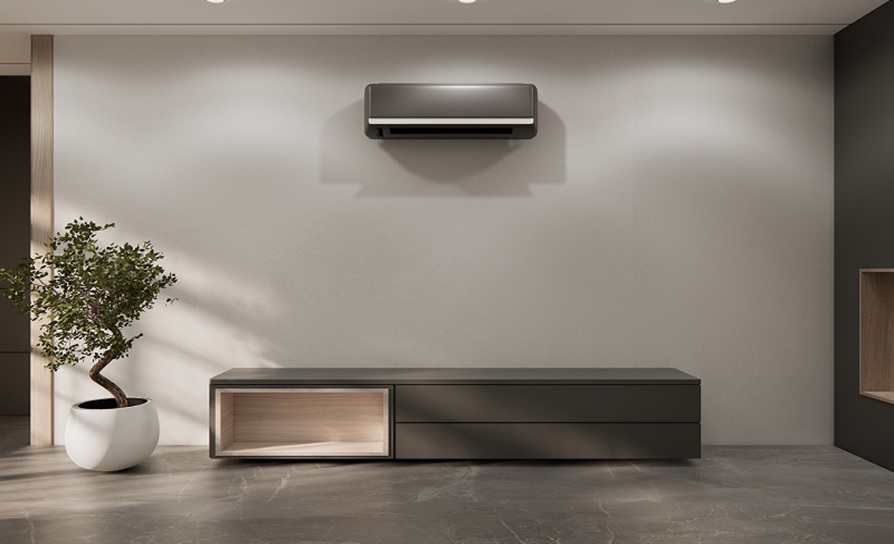
The World Health Organization’s long-standing guidance suggests bedroom noise should stay below about 30 decibels for good-quality sleep. That’s roughly the level of a soft whisper. In Singapore, where many households run the aircon all night, the unit above the bed is often the loudest thing in the room once the lights go off. Most modern wall-mounted units can run very quietly on low fan settings, so if yours has started to sound like it’s working much harder than it used to, the change is worth investigating. Sometimes a routine clean is enough; other times the sound points to a part that needs proper aircon service and repair.
How Loud Should a Bedroom Aircon Be?
Noise is measured in decibels (dB), and the scale isn’t intuitive: every increase of 10 dB is generally perceived as roughly twice as loud. A few familiar reference points help put your aircon in context:
| Sound level | Everyday comparison | What it means for a bedroom unit |
| Around 20 to 30 dB | Rustling leaves, a soft whisper | Typical of quiet indoor units on low or night mode |
| Around 40 dB | A quiet library | Noticeable in a silent room, may disturb light sleepers |
| Around 50 dB | Moderate rainfall, light traffic | Unusually loud for a bedroom unit at night |
| Around 60 dB | Normal conversation | Far louder than an indoor unit should sound |
You can get a rough idea using a free decibel app on your phone, held about a metre from the unit with the room otherwise quiet. Phone readings aren’t laboratory-accurate, but a big change compared with when the unit was newer is a useful clue.
Sounds a Regular Service Usually Fixes
Plenty of night-time noise comes from dirt, dust and small parts that have worked loose over months of daily use. These are typically sorted during a routine visit:
- Whooshing or straining airflow: Clogged filters and dusty coils force the fan to work harder, which often makes the unit louder.
- Light rattling: Loose front panels, screws or vibrating covers can usually be tightened.
- Gurgling or dripping: A partly blocked drain line can trap water and air, which flushing usually clears.
- Musty smell with a hum: Built-up dirt inside the unit can affect both the sound and the air quality.
If the noise returns soon after a clean, it’s worth asking about a fuller aircon service and repair check, since dirt may not be the whole story. Keeping to a regular servicing schedule, rinsing filters at home every few weeks and keeping the outdoor unit free from clutter all help stop these noises from coming back.
When the Sound Points to a Repair
Some sounds signal wear or damage rather than dirt. A grinding or squealing noise often comes from worn fan motor bearings. A steady hissing while the unit runs can point to a refrigerant leak, especially if cooling has weakened. Loud banging or clanking may mean a loose part inside the unit or compressor. Constant clicking during operation, rather than just at start-up, can suggest an electrical issue.
In these cases, switch the unit off and arrange a check rather than letting it run through the night. Continuing to use it can turn a single worn part into damage that affects the components around it, and a refrigerant leak should be located and sealed by a qualified technician. Booking aircon service and repair at the first sign of these sounds usually keeps the fix simpler.
Help Your Technician Find It Faster
- Note when the noise happens: at start-up, during cooling, when switching off or only at night.
- Check whether it comes from the indoor unit, the outdoor unit or both.
- Record a short video or audio clip on your phone so the technician can hear it.
- Mention any other changes, such as weaker cooling, water leaks or unusual smells.
These details make the visit more efficient, because the technician can focus on the most likely causes straight away.
Small Settings That Make a Big Difference
While you wait for a visit, a few adjustments can make the room quieter. Many units have a sleep or quiet mode that lowers fan speed and gradually adjusts the temperature through the night. Setting a moderate temperature rather than the lowest possible one also means the unit doesn’t have to work as hard. These settings won’t cure a mechanical fault, but they can reduce everyday noise once your aircon is in good working order.
A quiet bedroom is one of those things you only notice when it’s gone. Rather than learning to sleep through a rattling or grinding unit, getting regular aircon service and repair when needed helps keep your nights peaceful and your system running efficiently for longer.
If your aircon has become the loudest thing in your bedroom, we can help track down the cause. Contact Cool Channels Engineering to book a technician and get your nights quiet again.
