
Three Angles, One Remote: Making Bay and Corner Windows Work With Automated Blinds in Singapore

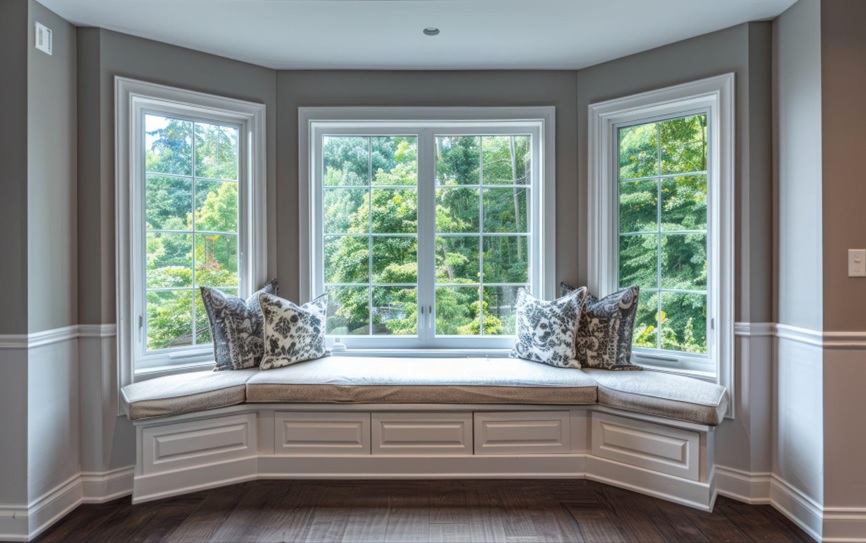
How many blinds does one bay window need? Usually three, sometimes five, because each angled pane needs its own blind to sit flush against the glass. That’s the neat, tailored look most people want, but it comes with a daily chore: raising and lowering every section by hand, one cord at a time, and trying to get them all level. Corner windows in condos and corner meeting rooms in offices have the same problem. It’s one of the clearest cases for automated blinds in Singapore, because a single remote or app can move every section together.
A Blind for Every Angle, Not One Stretched Across
A single wide blind stretched across an angled bay leaves awkward gaps where the window bends, letting light spill through and making the whole arrangement look unfinished. Fitting a separate made-to-measure blind to each section solves that. Slim headrails help the panels meet more neatly at the corners, and each blind can follow the exact width of its own pane.
The trade-off is control. Three manual blinds rarely end up at the same height, especially in a busy household. That’s fine for a quick fix, but over time a lopsided bay window can undo much of the effort that went into choosing fabrics and fitting them precisely. The same issue shows up with office blinds on angled glass, where uneven panels across a corner meeting room are noticed by every visitor.
How Motorisation Ties the Sections Together
Motorised blinds let you group several blinds so they move as one, which is exactly what multi-section windows need. Once they’re linked, every panel rises or falls together and stops at the same height. Here’s how manual and motorised setups compare on a typical three-section bay:
| Manual blinds | Motorised blinds | |
| Adjusting all sections | Three separate cords or chains | One button, remote or app |
| Keeping heights even | Done by eye each time | Panels stop at the same preset level |
| Hard-to-reach panes | Leaning over furniture or sills | Controlled from across the room |
| Daily routines | Adjusted morning and evening manually | Can be scheduled to open and close |
| Cords near children and pets | Visible cords need careful management | No dangling cords on the window |
Many systems can also be linked to smart home platforms, so the blinds open at sunrise or close automatically when the afternoon sun becomes too strong. For homeowners weighing automated blinds in Singapore, that scheduling is often the feature they end up using most.
What About Corner Windows and Glass Walls at Work?
Offices face their own version of the bay-window problem. Corner meeting rooms, angled façades and floor-to-ceiling glass are common in Singapore’s commercial buildings, and the strong sun here can create harsh glare on screens within minutes. Choosing the right office blinds for these spaces is about more than looks. They need to control glare, keep rooms comfortable and still let in enough daylight for people to work.
Sunscreen roller fabrics are a popular choice for offices because they cut glare while keeping some view to the outside. They’re often described by their openness factor, a percentage that indicates how open the weave is: a lower figure blocks more light, while a higher one keeps more of the view. Motorising office blinds on multi-angled glass means a meeting room can be dimmed for a presentation with one switch rather than a round of tugging at cords.
Before You Motorise: A Few Practical Questions
- Power source: Ask whether the motors will be hardwired or battery-powered, as this affects installation and maintenance.
- Grouping: Decide which sections should move together and whether any should also work independently.
- Controls: Choose between wall switches, handheld remotes, an app or voice control, or a combination.
- Fabric and light: Match fabrics to the room, from blackout in bedrooms to light-filtering or sunscreen in living areas and offices.
- Window clearance: Check handles, grilles and deep sills so each blind can travel freely.
Sorting these details early makes installation smoother and avoids surprises once the blinds are up.
Small Windows, Big Daily Difference
Bay and corner windows are often the most attractive feature of a room, whether that’s a reading nook in a condo or the corner office everyone wants. They’re also the windows people tend to leave half-adjusted because handling several blinds is a hassle. Automating them turns a fiddly job into something you don’t think about at all. For homes, it means a tidy window every morning. For offices, it means meeting rooms and workstations that can switch from bright to glare-free in seconds. Either way, automated blinds in Singapore are less about novelty and more about making a demanding window easy to live with.
Got a bay window that never quite lines up, or a glass-walled meeting room that turns into a sun trap every afternoon? Contact De Art Studio to plan made-to-measure motorised blinds for every angle.
