

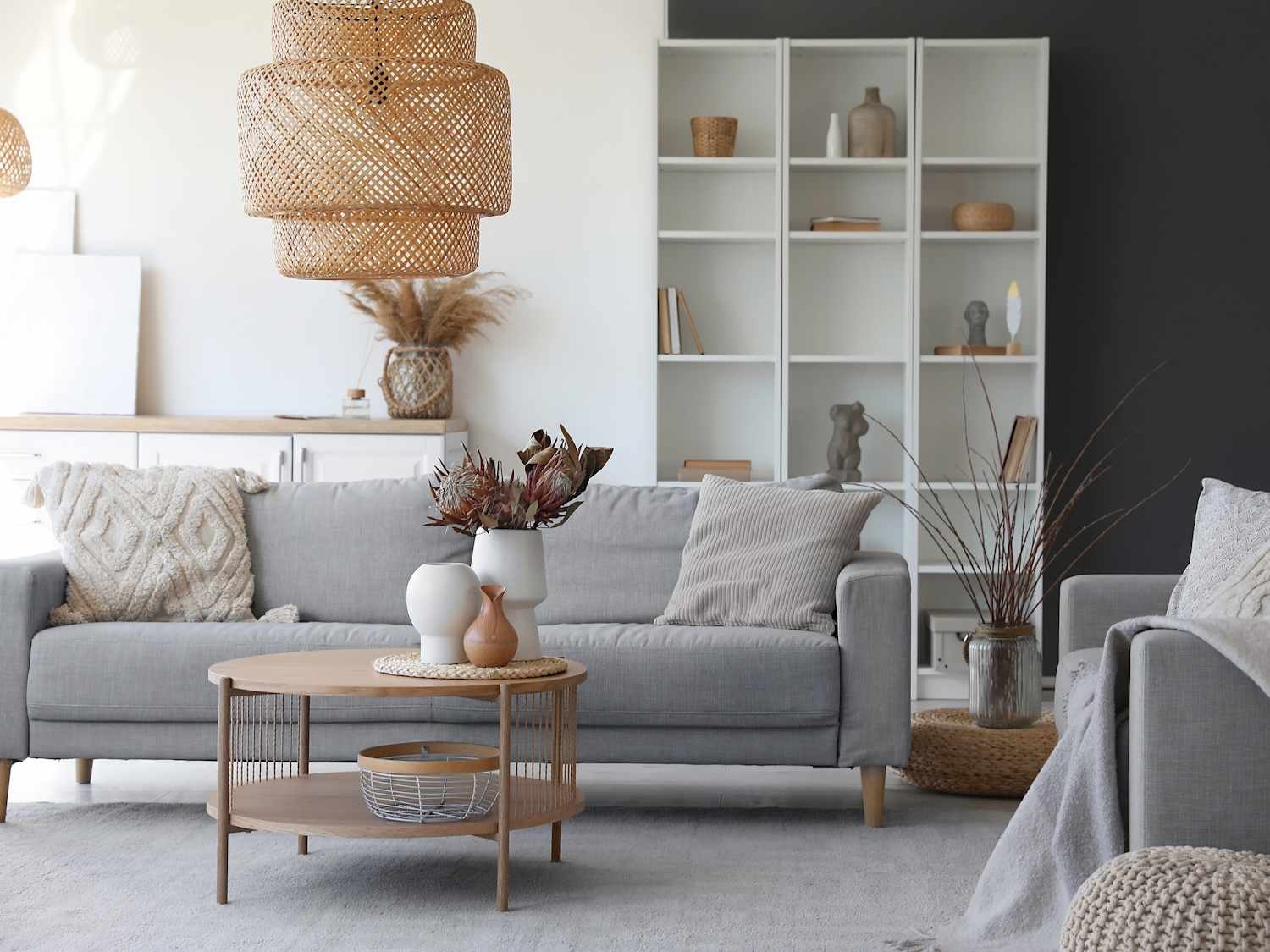
The living room is the most purchased furniture category in the country and also the most returned. Homeowners invest thousands of dollars in sofas, chairs, and tables, only to find the room still doesn’t feel right once everything arrives. The pieces don’t relate to each other. The scale is off. The whole thing looks like a showroom floor rather than a home.
The problem almost never comes down to taste. It comes down to process.
The Piece-by-Piece Trap
Most people furnish their living room incrementally — a sofa first, then a rug a few months later, then chairs when the sofa starts to look lonely. Each decision is made in isolation, often from a different retailer, in a different context, without a clear picture of how everything will work together.
The result is a room full of individually reasonable choices that don’t add up to a coherent space. Colors that almost match. Scales that nearly work. A rug that’s too small because it was purchased before the sofa arrived and the proportions weren’t clear yet.
Incremental furnishing isn’t wrong in principle — budgets are real and rooms evolve. But it requires a plan upfront that most people skip, which is why the room never quite comes together.
Start With the Room, Not the Furniture
Before looking at a single piece of furniture, the room itself needs to be understood as a system. That means four things:
Scale and proportion. The single most common living room mistake is furniture that’s too small for the space. A sofa that looks generous in a store can disappear against a large wall. Measure the room carefully, then map out a rough furniture footprint on paper or using a free room planning tool before purchasing anything. The goal is to understand how much floor space the major pieces will actually occupy.
Traffic flow. A living room needs clear pathways — ideally 36 inches or more between major pieces — so the space functions without people having to navigate around furniture. This is easy to overlook when browsing online or in a showroom context, where pieces are often staged in larger-than-average floor settings.
A single focal point. Every well-designed living room is organized around one dominant feature — a fireplace, a large window, a media wall, or an architectural element. Furniture should be arranged to acknowledge that focal point rather than compete with it. Rooms that feel restless or disorganized usually lack this anchor.
A fixed style direction. Not a rigid one — mixing styles thoughtfully is how rooms develop personality — but a defined starting point. Transitional, coastal, contemporary, traditional: committing to a primary direction before purchasing prevents the visual noise that comes from pieces that speak different design languages.
Why Seeing Pieces Together Matters More Than You Think
Product photography is designed to make individual pieces look their best. What it can’t convey is how a sofa’s scale reads next to a specific chair, how a fabric’s undertone shifts under natural light versus artificial light, or whether two pieces that look complementary in separate listings actually work together in practice.
This is the core argument for visiting a living room furniture showroom before committing to major purchases. A well-curated showroom presents pieces in room-like vignettes that make scale, proportion, and compatibility legible in a way that online browsing fundamentally cannot. The difference between a fabric that reads as warm taupe and one that reads as grey often only becomes clear when they’re in the same space, under the same light.
This isn’t an argument against researching online — narrowing down options digitally before visiting in person is an efficient approach. But the final decision on anchor pieces is almost always better made in person.
The Anchor-First Rule
If there’s one principle that prevents most living room mistakes, it’s this: buy the largest piece first, then build around it.
The sofa is almost always that piece. Its scale, color, and style sets the parameters for everything else — the rug size, the chair options, the table heights, the overall palette. Choosing the sofa last, after other pieces have already been purchased, is how rooms end up with a rug that doesn’t relate to the seating or chairs that fight rather than complement the main sofa.
Once the anchor piece is selected and delivered, photographing it in the actual room — under the room’s actual light — before buying anything else is a simple practice that prevents most compatibility problems down the line.
A living room that works isn’t the result of having better taste or a bigger budget. It’s the result of making decisions in the right order, with the full picture in view. That shift in process — from reactive to intentional — is what separates rooms that feel finished from ones that never quite get there.
