

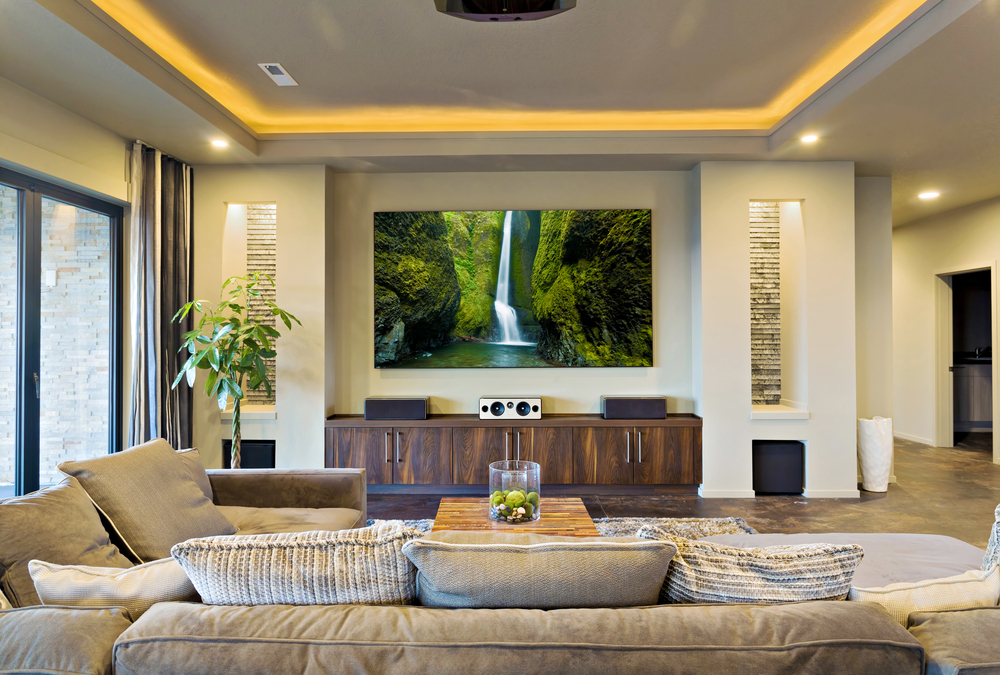
Most home design frustration follows the same pattern. A room feels wrong, so you repaint. It still feels wrong, so you rearrange. You swap out throw pillows, add a rug, buy a new side table. The room still feels off, and eventually you resign yourself to the idea that the space just doesn’t work — when in almost every case, the problem was never the furniture or the color on the walls. It was the lighting.
Lighting is the single most influential variable in how a room looks and feels, and it’s the one most homeowners treat as an afterthought. Getting it right doesn’t require an interior designer or an expensive renovation. It requires understanding a few principles that the lighting industry has known for decades but rarely bothers to explain.
Why Most Rooms Are Lit Wrong
The default approach to residential lighting is what designers call “single source” — one overhead fixture, usually centered on the ceiling, casting light straight down across the entire room. It’s how most homes are wired, and it’s almost always wrong.
Overhead light flattens a room. It eliminates shadow, which is what gives spaces depth and dimension. It creates unflattering downward angles on faces, which is why people instinctively feel uncomfortable in rooms lit this way without being able to articulate why. And because it’s often the brightest fixture in the space, everything else gets washed out — artwork, texture, architectural detail — all rendered invisible.
The irony is that homeowners often respond to this flatness by buying a brighter bulb, which makes the problem worse rather than better.
The Layered Lighting Principle
Professional designers work with three categories of light, used in combination: ambient, task, and accent.
Ambient light is the foundational layer — general illumination that sets the overall brightness of a room. This can come from overhead fixtures, but it works best when it’s diffused rather than direct: a fixture that bounces light off the ceiling, a series of recessed lights on a dimmer, or even multiple lamps working together rather than a single dominant source.
Task lighting serves a specific function — reading, cooking, working — and should be positioned to illuminate the activity rather than the room. A floor lamp beside a reading chair, under-cabinet lighting in a kitchen, a desk lamp at the right height. Task lighting is where people most often underinvest, relying on ambient light to do work it wasn’t designed for.
Accent lighting is directional and intentional — a picture light over artwork, a spotlight aimed at a bookcase, a lamp placed to graze a textured wall and reveal its depth. It’s the layer that makes a room look professionally designed rather than assembled, and it’s the easiest to add without any rewiring.
The goal is not to use all three in every room, but to make conscious choices about which layers a room needs and let them work together. A living room with a dimmed overhead fixture, two floor lamps, and a single accent piece aimed at a focal wall will feel dramatically different — warmer, more dimensional, more considered — than the same room lit by one bright ceiling fixture.
Where Most People Go Wrong When Shopping for Fixtures
Understanding lighting principles is one thing. Translating them into actual purchases is where most people run into trouble, and the reason is almost always the same: they’re shopping from a screen.
Photographs of light fixtures are nearly useless as purchasing guides. The way a fixture distributes light, the warmth or coolness of its output, the way its finish reads under different conditions — none of this is visible in a product image. Buying lighting online is guesswork in a category where the details matter enormously.
This is why browsing a lighting showroom in person remains the most practical step a homeowner can take when planning to update their lighting. Seeing fixtures illuminated, at scale, in a real environment removes most of the uncertainty that makes lighting purchases go wrong. It also surfaces options that would never have appeared in an online search — pieces that work precisely because a buyer could see them working before committing.
The Fastest Upgrade in Any Room
There’s a reason professional stagers prioritize lighting above almost everything else before a home goes on the market. A well-lit room photographs better, feels larger, and makes everything in it — furniture, finishes, color — look more intentional.
The good news is that layering light doesn’t require rewiring or construction. Most of it can be accomplished with lamps, dimmers, and a few deliberate fixture choices. For most rooms, it’s also the highest-return improvement available — faster, cheaper, and more transformative than any paint color or furniture rearrangement. The room was never the problem.
