

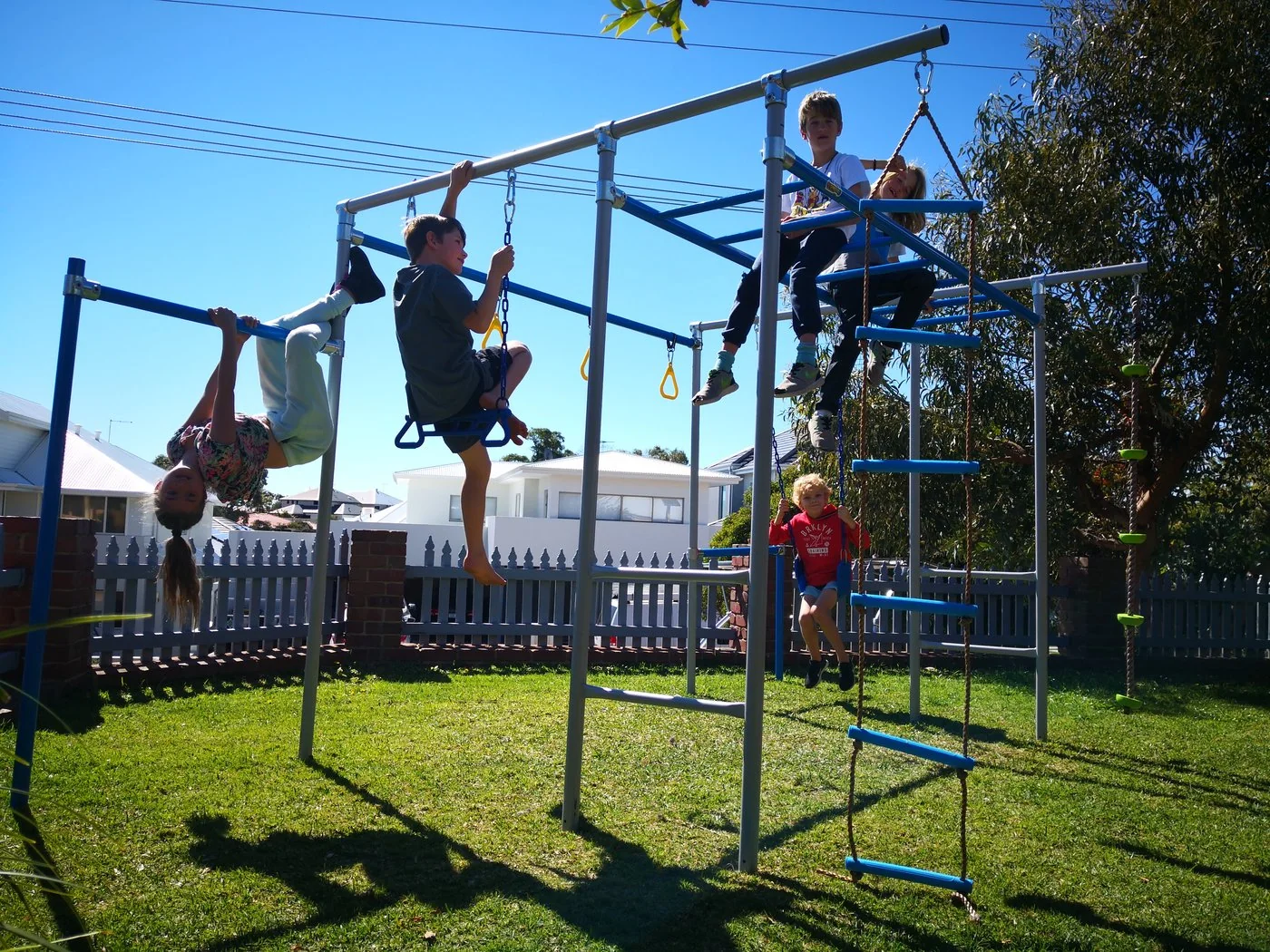
For many families, getting children outside can sometimes feel like competition with televisions, tablets, gaming consoles and other forms of indoor entertainment.
Simply telling children to go outside is not always enough. Outdoor time becomes much more appealing when children have interesting things to do and enough freedom to decide how they want to play.
Fortunately, encouraging outdoor activity does not require completely redesigning the garden. Small changes can make spending time outside a much more natural part of the day.
Make the Outdoors Easy to Access
Convenience influences behaviour more than most people realise.
If outdoor toys are packed away somewhere difficult to reach, children may choose an easier indoor activity instead. Keeping commonly used items such as balls, chalk, bats and skipping ropes in an accessible storage box reduces the effort needed to start playing.
The same principle applies to the backyard itself. An outdoor area that feels welcoming and usable will generally attract more activity than one that adults treat primarily as a space that must remain perfectly tidy.
Offer Several Types of Activity
Children do not necessarily want to do the same thing every day.
Some days may involve running and energetic games, while others might involve drawing, gardening, building or imaginative play.
A variety of options makes the backyard more interesting.
Families might combine a small open lawn with a sand area, basketball hoop, garden bed, swing or climbing equipment. Features such as Monkey Bars can also add a physical challenge that children can approach in different ways as their confidence and abilities develop.
Providing choices allows outdoor play to follow a child’s mood rather than turning it into another scheduled task.
Avoid Organising Every Minute
Structured sports and activities have clear benefits, but children also benefit from opportunities to decide what happens next.
Unstructured play encourages them to invent games, solve small problems and negotiate rules when playing with siblings or friends.
Adults do not always need to provide an activity.
Sometimes a few simple materials are enough. Cardboard boxes, buckets, chalk, timber offcuts intended for safe play or even garden leaves can become ingredients for surprisingly elaborate games.
The objective is to create an environment where experimentation is possible.
Spend Time Outside as a Family
Children often copy adult behaviour.
If parents consistently remain indoors while encouraging children to spend time outside, the backyard may begin to feel like a children’s area rather than a shared family space.
Eating dinner outside occasionally, doing some gardening, reading on the patio or simply sitting outdoors with a drink can change that perception.
When being outside is normal for the entire household, children are less likely to view outdoor time as something they are being instructed to do.
Invite Friends Over
Social interaction can transform how children use an outdoor space.
A backyard that receives little attention on an ordinary afternoon may suddenly become the centre of activity when friends arrive.
Games tend to evolve naturally when several children are together. One activity leads to another, and equipment may be used in ways adults had never anticipated.
This does not require organising elaborate parties. An occasional afternoon with a school friend can be enough to renew interest in the backyard.
Introduce Small Challenges
Children often respond well to achievable challenges.
Rather than saying, “Go outside and exercise,” an adult might suggest seeing how many times someone can jump a skipping rope, how long they can balance on one foot or whether they can complete a homemade obstacle course.
Challenges create a simple objective while still allowing play to remain informal.
As children improve, they can modify the rules themselves and create increasingly difficult versions.
Let the Backyard Change
Children’s interests change quickly.
A five-year-old and a twelve-year-old are unlikely to use an outdoor area in exactly the same way. Families therefore benefit from keeping at least part of the backyard adaptable.
Portable goals, adjustable equipment, movable furniture and open spaces are particularly useful because they can serve different purposes over time.
Avoiding an overly fixed layout can also save families from needing to redesign the backyard every few years.
Focus on Habit Rather Than Screen Bans
Outdoor activity does not have to be positioned as the opposite of technology.
Strictly framing outdoor play as something children must do because they have spent too much time on a screen can make it feel like a punishment.
A more sustainable approach is simply making outdoor time part of normal family routines.
This could mean going outside after school, spending part of weekend mornings in the garden or having afternoon snacks outdoors when the weather allows.
Over time, repetition can turn outdoor activity into something children expect rather than something adults need to enforce.
Make Outside Worth Choosing
Children generally do not need much encouragement to play when the environment is interesting.
Accessible equipment, flexible spaces, opportunities for creativity and involvement from family and friends can all make a backyard more appealing.
The goal is not to eliminate indoor entertainment. It is to ensure that going outside remains an equally attractive option.

Comments are closed.