

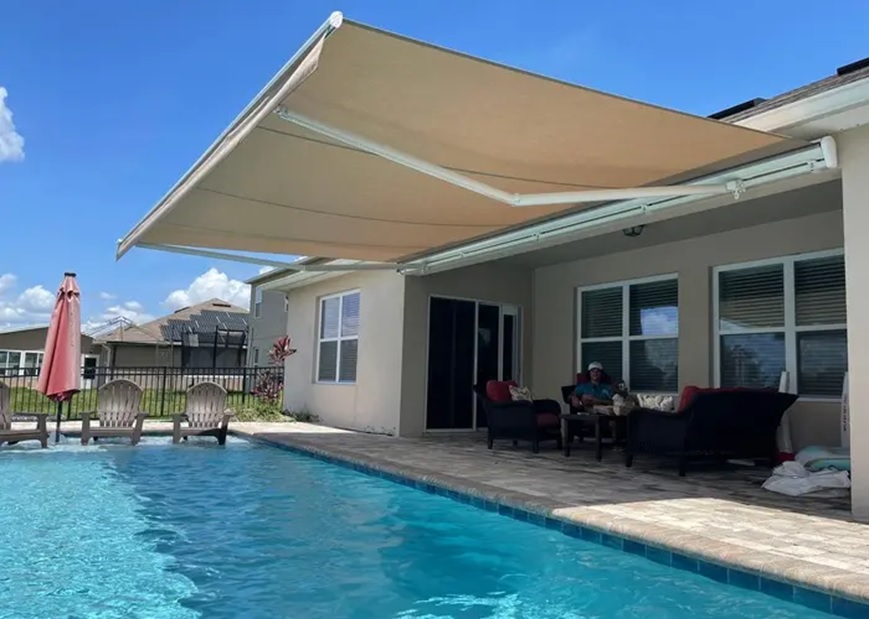
An uncovered patio offers an open connection to the backyard, but that openness can also limit when the space feels comfortable to use. Direct sunlight may reach seating and dining areas during certain hours, while homeowners may still want an unobstructed view of the sky at other times. Motorized awnings in Dallas provide an adjustable approach to shade, allowing homeowners to extend coverage when it is useful and retract it when they prefer a more open outdoor setting.
Homeowners interested in adjustable shade solutions can explore conservationscreensandawnings.com/ for information about available options. Before choosing an awning, it is useful to identify exactly where additional shade would improve the outdoor area. The position of the sun, patio dimensions, doors and windows, furniture placement, and the home’s exterior architecture can all influence the project.
Map the Sun Across the Patio
The most useful place to begin is the patio itself.
Homeowners can observe the space in the morning, around midday, and later in the afternoon. Instead of simply noting whether the patio is sunny, pay attention to where the sunlight actually falls.
A dining table might remain shaded until late afternoon, while a nearby seating area receives direct sun much earlier. The exterior wall may also create natural shade during certain hours.
These patterns help homeowners understand where adjustable coverage could make the greatest difference.
Decide Which Activities Need Shade
Not every part of a patio needs identical coverage.
A homeowner who primarily uses the space for outdoor meals may want shade concentrated around the dining area. Someone who spends weekends reading or relaxing outside may have different priorities.
Families should consider the activities that already happen on the patio rather than designing entirely around hypothetical future use.
Where do people naturally gather? Which chairs are used most frequently? Is there an area that everyone avoids during a particular part of the day?
These everyday behaviors can provide useful direction when considering motorized awnings in Dallas.
Think About Extension Into the Yard
An awning extends outward from the house, so homeowners should consider the area directly in front of the mounting location.
Patios vary considerably in depth. Some have furniture positioned close to the house, while others extend farther into the backyard.
Understanding how much of the existing living area homeowners want to cover can help establish realistic expectations for the project.
It is also useful to consider pathways around the patio. Shade over a seating area may be the priority, while frequently used walking routes can remain outside the primary covered zone.
Look Above the Patio
Homeowners naturally focus on the patio floor and furniture, but the exterior wall above the space is equally important.
Rooflines, gutters, windows, doors, exterior lights, vents, and architectural details may occupy the area where an awning is being considered.
The mounting surface and surrounding structure need to be evaluated as part of the project.
Photographs of the entire exterior elevation can help homeowners see details they may normally overlook.
Professional measurements and evaluation can then determine how an awning may fit with the actual configuration of the house.
Coordinate the Awning With Exterior Colors
Because an awning becomes a visible part of the exterior when extended, its appearance should work with the house.
Siding, brick, trim, roofing, doors, and window frames can all influence color selection.
Homeowners should view material samples outdoors whenever possible.
Colors can appear different under direct sunlight than they do indoors or on a screen. Comparing options against the actual exterior provides a better sense of how the awning will relate to surrounding materials.
When selecting motorized awnings in Dallas, homeowners can aim for a design that feels integrated with the house rather than added as an afterthought.
Remember the View From Inside
An awning is an exterior improvement, but homeowners may also see it from inside the house.
Large patio doors and windows can provide direct views of the outdoor structure from kitchens, living rooms, and dining spaces.
Stand inside these rooms and look toward the patio.
Consider how an extended awning might become part of the view and how the outdoor area visually connects with the interior.
This perspective is particularly useful in homes where the patio functions as an extension of the main living space.
Consider How Furniture May Change
Outdoor furniture does not necessarily stay in the same arrangement forever.
A small dining set could eventually be replaced with a larger table. Lounge chairs may become a sectional, or homeowners may add another seating zone.
When planning an awning, it can be helpful to consider whether the patio layout is likely to evolve.
Homeowners do not need to predict every future purchase. However, allowing some flexibility can help the shade solution remain useful even if the outdoor space changes.
Plan Around Doors and Outdoor Traffic
Patio doors often sit directly beneath or near an awning location.
That makes traffic flow an important part of planning.
Homeowners may regularly carry food, drinks, toys, gardening supplies, or other belongings between the house and patio. Guests may also move frequently through the same entrance during gatherings.
The shade configuration should support these routines rather than making the doorway feel disconnected from the main outdoor living area.
Thinking about movement can help homeowners decide which portion of the patio should receive the most coverage.
Understand When Retraction Is Appropriate
The ability to retract an awning is one of the characteristics that distinguishes it from a permanent patio roof.
Homeowners should understand how and when their specific system should be operated.
Manufacturer recommendations may address appropriate use under different weather conditions. Owners should become familiar with those instructions instead of assuming that an extended awning is intended to remain in place under every condition.
When considering motorized awnings in Dallas, asking about operation and recommended care is just as important as selecting dimensions and appearance.
Include the Awning in Future Exterior Plans
A homeowner may eventually replace siding, install new windows, change patio doors, update lighting, or renovate the outdoor living area.
These plans can affect the area surrounding an awning.
Mentioning future improvements during the planning stage can help homeowners consider how different projects will interact.
If exterior colors will change soon, for example, the future palette may be more relevant than the current one when selecting an awning.
Thinking ahead can make separate improvements feel like parts of one long-term exterior plan.
Learn the System Before Installation Is Complete
Once the awning is installed, homeowners should become comfortable operating it.
They can ask how the controls work, how the system should normally extend and retract, and what routine maintenance is recommended.
Warranty information and operating instructions should be stored somewhere accessible.
If multiple household members will use the awning, it can be helpful for everyone to understand the basic operation rather than relying on one person to manage the system.
Familiarity makes an adjustable outdoor feature easier to use as part of everyday routines.
Give an Open Patio More Options
An uncovered patio does not necessarily need a permanent roof to gain useful shade. By considering sun patterns, seating areas, traffic flow, architecture, exterior colors, and future improvements, homeowners can determine whether an adjustable solution fits the way they use their property. Motorized awnings in Dallas can provide shade when desired while allowing the outdoor space to return to a more open configuration at other times.
For homeowners interested in creating more flexibility around an outdoor living area, Conservation Motorized Screens and Awning of Dallas can evaluate the patio and discuss awning options based on the home’s structure and intended use. A carefully planned installation can help homeowners adjust their outdoor space as sunlight and daily activities change.
